Haftseen for Norooz
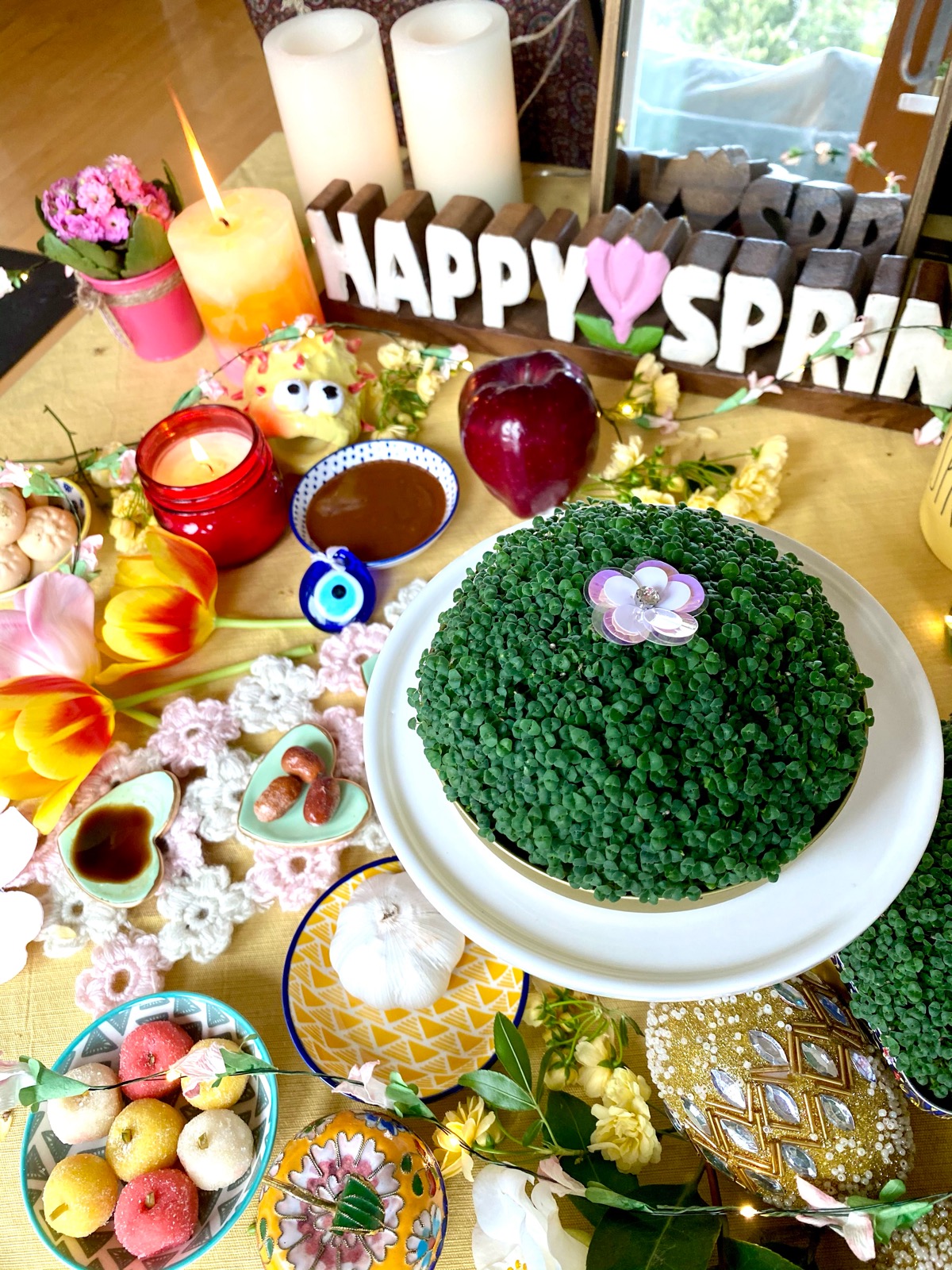
Today’s share is a recipe for a very special Persian table setting called “haftseen”, a symbolic setting for the Persian New Year | Norooz. Persian days follow a solar calendar. Norooz is a non-secular holiday that happens at the exact moment of the turning of seasons from winter to spring. The Haftseen table is the center of this holiday filled with sentiments of hope and renewal. The Persian new year festivities last for 13 days! The haftseen table setting is so significant that family and friends light candles and gather around it to bring in the new year.
The haftseen is the main decor or table setting we have for our spring holiday. Now for a quick description on the etymology of the name of this day or holiday. Since the Farsi language uses Arabic letters, I will explain the meaning using phonetic spellings of Farsi words and definitions.
“haft” means 7 and “seen” is the letter in the Farsi language making the “s” sound
“Haftseen” (also known as “haft-seen”, “haftsin”, and “haft-sin”) = 7 “seens”
“Sofreh” = a special table setting or table spread.
“Sofreh Haftseen” = Table setting with seven things that start with s!
In Farsi, we call the Persian new year “Norooz” (also phonetically spelled “Norouz”, “Nowruz”, “Nowrouz”, “Noruz”).
No = new
Rooz = day
Norooz = a new day!
Words that symbolize the special items displayed on the sofreh haftseen:
- renewal
- growth
- health
- hope
- healing
- love
- fertility
- reflection
- beauty
Sofreh Haftseen for Norooz is the table setting for the Persian new year.

Norooz is a big day for Persians! There are traditions both before the big day as well as in the aftermath.
Each year, Norooz falls at the exact moment of the vernal equinox when day and night are at equal lengths. In our family, we celebrate the Persian new year on a weekend day close to the first day of spring. Most years this date falls between March 19th and March 21st in western, or Gregorian calendars.
It all starts with a fun pre-amble known as “Chahar Shanbeh Souri”, or the Festival of Light and Fire. In Farsi, this first event of the New Year festivities Chahar Shanbeh Souri translates as ‘Fire Wednesday’. For more information about the customs around Fire Wednesday, hop over to our post where we share a healthy snack mix enjoyed on this special day called Ajeel | Persian Trail Mix.

The Persian new year is a collection of events and customs that lasts 13 days! On the 13th day, it is considered bad luck to stay indoors. Many families have picnics and play outdoor games on Sizdah Behdar (translated in Farsi 13th day outdoors). If the weather is not quite warm enough, a little fresh air or a short walk does the trick. The point is to get outside for cleansing and renewal.
Common customs during Norooz:
- spring cleaning – in Farsi “Khaneh Tekani” which translates literally as “shaking the house”!
- purchasing new clothes and shoes – in old custom, this is the one and only time children get new things each year
- setting the Haft-seen table with 7 symbolic items that start with the Farsi letter “seen”/words start with the “s” sound
- feasting – a feast consisting of herb rice and fish (see our recipe for Marinated Salmon), delicious Aash Reshteh | Persian Noodle Soup and kookoo sabzi, an herb frittata (see our easy recipe for Kookoo Sabzi Quiche Muffins)
- giving cash gifts (in Farsi called “eidee”/ ‘aidee’) to children
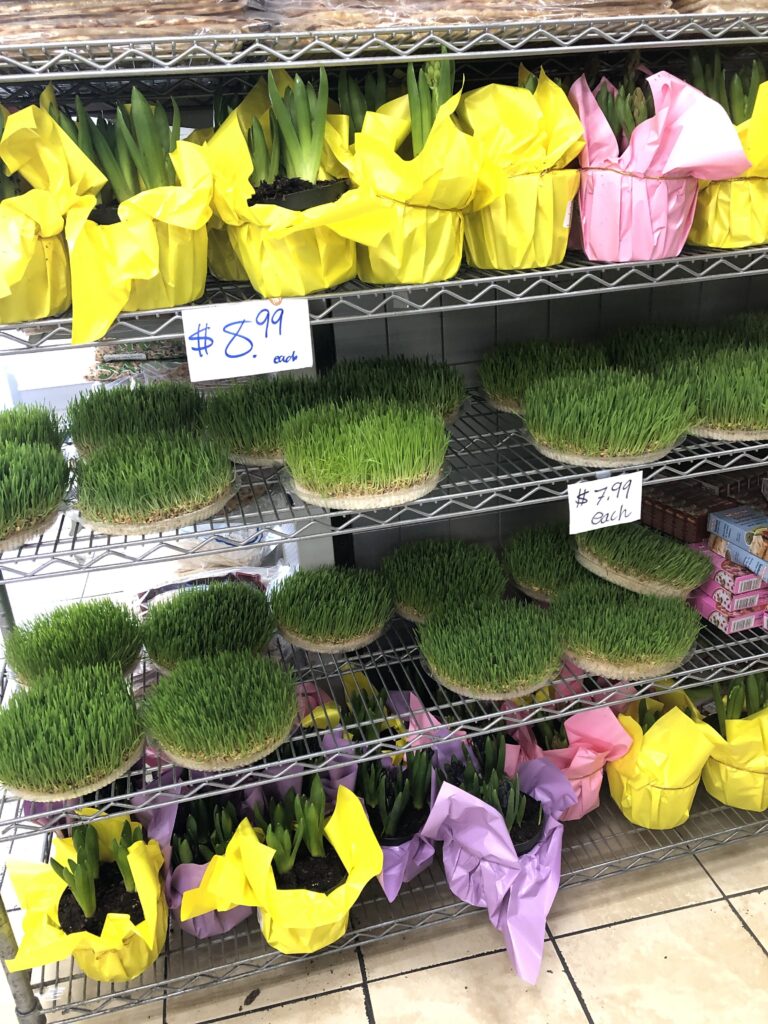
About 2 weeks before the new year, many families begin growing “sabzeh” which I like to call Persian grass. Sabzeh can be sprouted from lentils, mung beans, wheat, or even chia. There are many modern and creative ways to grow and display sabzeh.
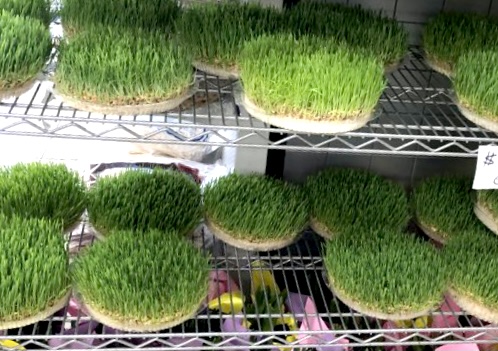
My favorite method is sprouting from chia seeds – I find it to be the easiest and most forgiving method. It also grows quickly with cute clover-shaped grass.

Children enjoy decorating and painting eggs!
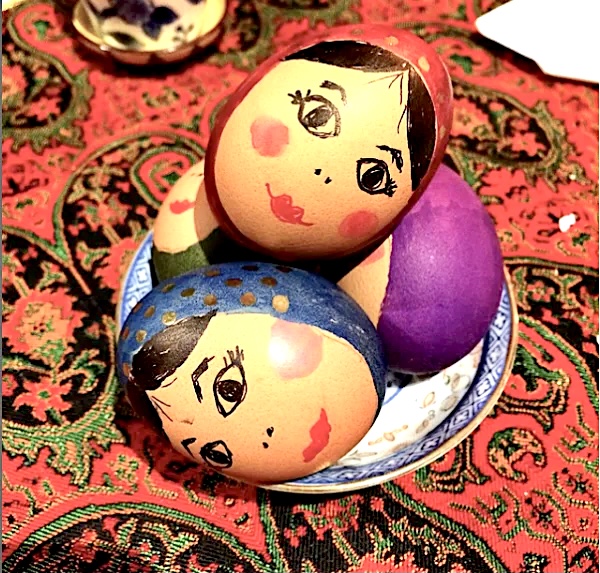
For a fun DIY post, check out Marbelized Easter Eggs.
Sweets are gathered from bakeries or made from scratch.
Favorite Persian cookies and sweets:
- Yazdi Cakes (my personal favorite treat!)
- Persian Rice Flour Cookies Naan Berenji
- Gluten-Free Persian Walnut Cookies Naan Gerdooee
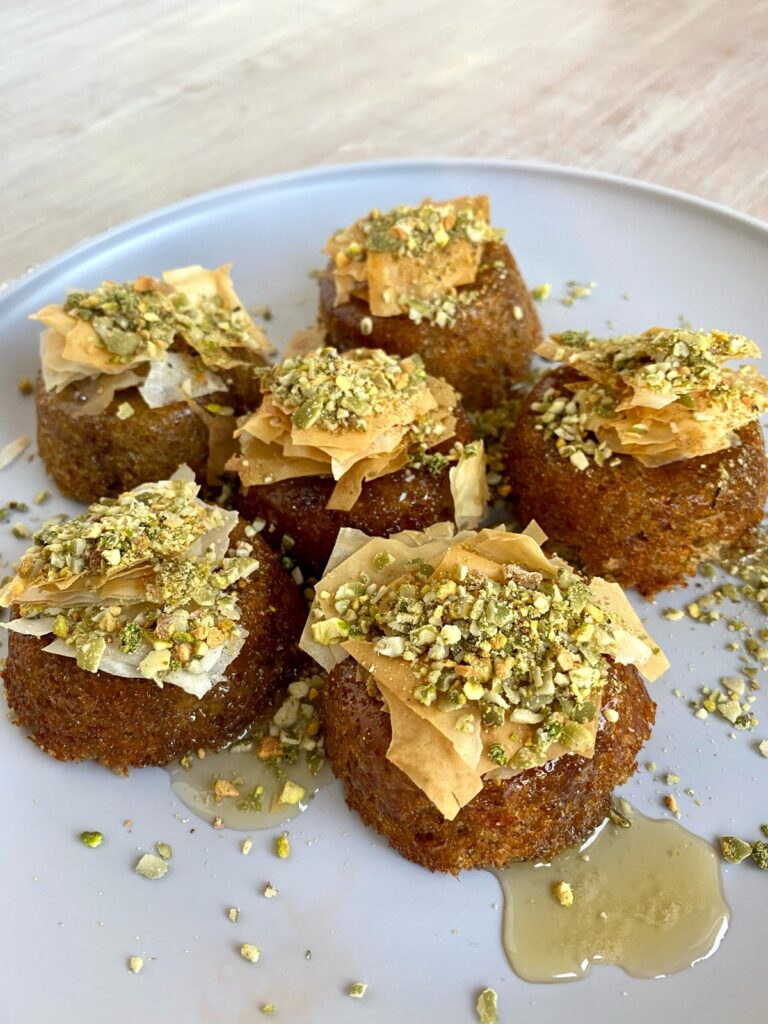
- Baklava Cupcakes
- Flourless Almond Rose Cake
- Persian Pound Cake with Currants
Bright, fragrant flowers adorn the table setting and are displayed throughout the house.

To celebrate Norooz is easy. Do your best to set up a version of the sofreh haftseen.
7 Symbolic Items on Sofreh Haftseen
- Sib: apple symbolizing beauty
- Sonbol: fresh and sweet-smelling hyacinth flower symbolizing the fragrance and beauty of life
- Seer: garlic symbolizes health
- Senjed: dried Persian olives symbolizing love
- Somagh: sumac representing the color of sunrise
- Serkeh: vinegar symbolizes aging
- Samanou: wheat sprout pudding representing patience, power, bravery
- Sabzeh: green sprouts representing growth and life
- Sekeh: coins symbolizing prosperity
There are more than seven items on this comprehensive list and there is flexibility around which 7 symbolic items to feature on your sofreh haftseen.

In addition to the 7 symbolic items set on a sofreh haftseen, there are a few optional and additional items often added to the spread.
Additional items
- “Termeh” or cloth which the items are placed on
- Goldfish in a fishbowl – movement and life
- “Shirini” – Farsi for sweets; for a sweet life
- Colored eggs – fertility
- A mirror – wisdom, reflection, and light
- Lit candles – enlightenment
- A bowl of rose water or orange blossom water – fragrance and sweetness
- Book of poetry (Hafez) or holy book (Qu’ran)
For more information about Norooz including the preambles, and events following the turning of the new year, listen to our podcast episodes:
- Episode 22: Norooz part 1: Prelude to Persian New Year and Charshambeh Souri
- Episode 23: Norooz Part 2, Persian New Year Haft-Seen and Food
- Episode 24: Norooz Part 3: Persian New Year Sizdah Bedar
- Episode 75: Norooz Haft Seen
It is our hope to keep the old traditions and customs alive while celebrating the Persian new year in our own modern way.